Renewable Exergy
  • Home
  • Infographics
  • Offers
  • Home
  • Infographics
  • Offers
  • Privacy Policy
  • About us
  • Contact us
  • DMCA

Saturday, 22 October 2022

The Complete Guide to Fourth Generation Biofuel and Why It's Better Than Ever

 October 22, 2022     Biofuel     No comments   


Introduction: What is Fourth Generation Biofuel?

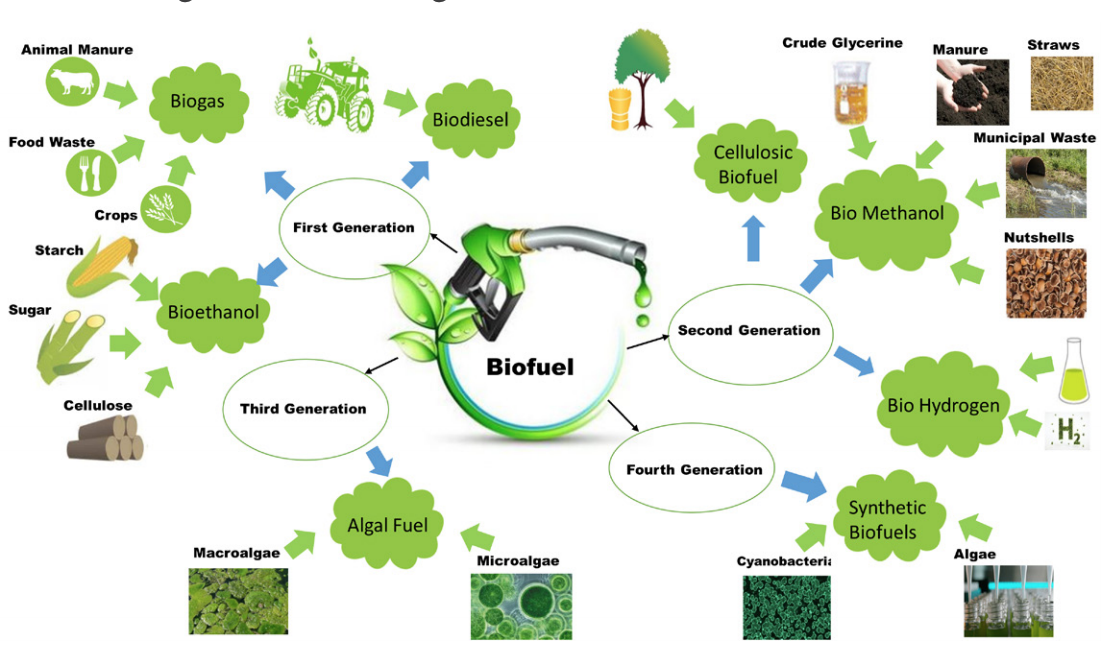
The first generation of biofuel was made from wood and other plant materials. The second generation was made from plant oils or vegetable oil. The third generation of biofuel is cellulosic ethanol, which is made from plants that have been grown specifically for fuel production. Fourth-generation biofuel is a type of renewable energy that can be used in the future to replace fossil fuels.

Fourth Generation Biofuel is a type of renewable energy that can be used in the future to replace fossil fuels. It is also called fourth-generation biomass, advanced biofuels, or next-generation biofuels and is not to be confused with fourth-generation nuclear power (which is not yet commercially viable).

Fourth-generation biofuels are the most recent type of biofuel available. They are made from organic material--like wood, animal waste and food waste--rather than food crops like corn. This article describes how they work and which fuels may be considered fourth-generation biofuels.

Why should you choose to invest in an alternative engine for your vehicle?

In this article, we'll be exploring the many benefits of investing in an alternative engine for your vehicle. These include significant savings on fuel costs and a reduction in emissions that would be harmful to the environment.

There are a number of reasons why you might want to consider investing in an alternative engine for your vehicle. These include:

- Improved fuel efficiency

- Reduced emissions

- Lower cost of ownership

- Less maintenance

The Biggest Benefits of Fourth-Generation Biofuel

Biofuels are a clean and sustainable source of fuel that is not only renewable but can be used to power vehicles and generate electricity. They are becoming a more popular choice since they emit fewer fumes than fossil fuels, help reduce carbon emissions, and offer an affordable way for people to reduce their dependency on fossil fuels.

The benefits of fourth-generation biofuel are many, some of which include:

- Reduction in greenhouse gas emissions by up to 60%

- Reduction in air pollution by up to 90%

- Increased availability of food for human consumption

Which Countries Have the Cleanest Air & How They Got There?

The air quality in some countries is so bad that it can cause cancer and other diseases. The World Health Organization (WHO) has a list of the cleanest countries with the best air quality.

The WHO has released a list of the cleanest countries with the best air quality. These are Finland, Iceland, New Zealand, Sweden, Austria, Switzerland, Norway, and Canada.

One thing these countries have in common is that they have public policies to cut pollution from vehicles and energy production.

In addition to these policies, they also have strong regulations on fuel standards for vehicles and energy production as well as low levels of coal-burning power plants which emit sulfur dioxide and nitrogen oxides which produce acid rain.

In addition to strong regulations and public policies, some of these countries also rely heavily on renewable energy sources such as hydroelectric, wind, and solar power. These sources of energy produce far fewer emissions than traditional fossil fuels, further contributing to their clean air rankings.

Another factor that has contributed to the success of these countries in achieving clean air is their investment in public transportation and active transportation infrastructure. By making it easier for people to travel without using personal vehicles, they have reduced the number of cars on the road and consequently reduced emissions.

Despite these successes, there is still much work to be done in improving air quality around the world. As more countries recognize the importance of clean air and take steps to address pollution, there is hope that air quality will continue to improve globally.
Read More
  • Share This:  
  •  Facebook
  •  Twitter
  •  Google+
  •  Stumble
  •  Digg

Wednesday, 24 August 2022

India has become the third-largest ecologically friendly power country in the world, and Green energy is likely to overtake petroleum goods.

 August 24, 2022     Green energy     No comments   


Due to its advantages over petroleum derivatives, particularly in terms of the environment, green energy is quickly becoming the preferred choice for many countries. The global biological system has recently been seriously influenced by environmental change. Rising levels of greenhouse gases have led to dry seasons in many parts of the world, flooding in certain areas, and then timberland fires in Europe and other parts of the world. Green energy also offers more climate-friendly alternatives, replacing the negative effects of petroleum derivatives. When obtained from common resources, it is typically perfect and sustainable, emitting no or very little greenhouse gases and is frequently easy to access.

Since sustainable power sources are less expensive, more dependable, and more efficient over time, people tend to view them as logical alternatives to petroleum products, which are unreasonably dangerous for the environment and force us to significantly change how we create and use energy. New energy arrangements are essential to combat environmental change, one of the biggest threats to humanity's ability to survive.

Wind power currently holds the top spot among ecologically friendly energy sources, and it is followed in terms of productivity by geothermal, hydropower, atomic, and sunlight-based energy. However, with the passage of time and technological improvements, this ranking may soon change. India, the world's third-largest producer of sustainable energy, has set a lofty target of 175 GW of green electricity by the end of 2022, with plans to increase that to 500 GW by 2030.

Solar, wind, geothermal, biogas, low-impact hydroelectric, and a few other approved biomass sources are all examples of sources of green energy. The Indian legislature has found a number of ways to support the transition to renewable energy, including allowing foreign direct investment (FDI) up to 100% under the planned course, waiving the costs of the Inter State Transmission System (ISTS) for projects that must be operational by June 30th, 2025, setting up Ultra Mega Renewable Energy Parks to provide large-scale renewable energy production, and more.

Power from the sun, wind, geothermal, and other renewable sources is included in "green energy." Other steps have been taken, including the laying of new transmission lines and the creation of new sub-station limits with regard to the clearing of sustainable power, the establishment of a Project Development Cell to attract and work with ventures, and standard offering rules for duty-based serious offering processes for the acquisition of force from lattice-related solar- and wind-powered projects.

In order to ensure prompt payment by dispersion licensees to RE generators, the government has also ordered that power be sent against Letters of Credit (LC) or advance payments. Programs for skill development are also being used to create a talent pool of workers for the execution, activity, and support of RE projects.

Despite the aforementioned, some steps have been taken specifically to advance wind energy, such as the concessional custom obligation exclusion on certain parts required for the assembly of wind generators. Additionally, a Generation Based Incentive (GBI) is being provided to projects that were appointed as of the latest date of March 31, 2017. Specialized assistance is provided through the National Institute of Wind Energy in Chennai, including wind asset appraisal and identification of likely locations.

Prior to it, the Indian government outlined a plan for switching to green energy. In accordance with the Prime Minister's statement at COP26, the Ministry of New and Renewable Energy is working to reach the introduced power ceiling of 500 GW from non-petroleum product sources by 2030.

A board of trustees has been assembled by the Ministry of New and Renewable Energy to establish a roadmap for achieving a 500 GW non-petroleum derivative-based energy limit by 2030. The board includes representations from important offices in charge of renewable energy and power.

As of February 28, 2022, 152.90 GW of renewable energy projects, including large hydro, have been launched in the nation. These projects included 50.78 GW from solar energy, 40.13 GW from wind energy, 10.63 GW from biomass power, 4.84 GW from small hydropower, and 46.52 GW from large hydropower.

Additionally, the activities of the 72.61 GW limit are in various stages of execution, and the 21.11 GW limit are in various stages of offering. 


Could it ever completely replace petroleum-based products? The majority of individuals frequently ask this question. The advancements being made in the energy sector strongly suggest that green energy will soon be able to displace petroleum-based products. To achieve this goal, it might be necessary to use modified creations from diverse sources at several locations. For instance, geothermal energy is particularly effective in areas where it is simple to utilise this resource. Additionally, when available in sufficient quantities, such as in India, wind energy or solar electricity may be better suited to specific geographical areas.

In any case, there are numerous reasons to accept that petroleum products could be eliminated by combining various green energy sources to answer our problems and with the advancements that are being made in the construction and advancement of these assets. 

Although this event is still a few years away, it is still true that it is crucial to do so in order to slow down environmental change, address the climate, and transition to a more sustainable future.

The Indian government is constantly forging ties with diverse groups, organizations, and countries in order to expand the range of green energy sources. The Mahatma Phule Renewable Energy and Infrastructure Technology Ltd. (MAHAPREIT), a fully owned subsidiary of MPBCDC (49% owned by the Government of India and 51% claimed by the Government of Maharashtra), and the Indian Renewable Energy Development Agency Ltd. (IREDA), signed a memorandum of understanding. Additionally, other organizations
 and state legislatures are making a variety of efforts in this direction.

Read More
  • Share This:  
  •  Facebook
  •  Twitter
  •  Google+
  •  Stumble
  •  Digg

Sunday, 10 July 2022

The future of renewable energy is being altered by these technology

 July 10, 2022     Green energy     No comments   

The future of renewable energy is being altered by these technology.


Thanks to declining prices and growing demand for greener energy sources, the market for sustainable power is transforming. The next five technological developments will have an immediate impact on business.

 Environmentally friendly power production has upended international commercial sectors, and change brought on by renewable energy continues to move extremely quickly. Indeed, not too long ago, few people would have predicted the scope of the recent developments made to aid nations in beginning the process of decarbonizing their economies or expected well-known companies like Google to invest sizable sums in solar energy projects.

Some of these developments have been consistent, while others have been unexpected. Others are just getting started, and people aren't yet fully aware of how important they are. Here are five of the most significant trends and developments in sustainable power. Over the previous 10 years, some have significantly changed the energy sector, while others are about to cause disruptions.

Solar and Wind


For the most part, wind turbines and solar-powered chargers address the future of ecologically friendly energy. The two power sources are seen in many rural areas and have transformed the market.

"The greatest impact has been wind and solar-driven advancements, resulting in an extraordinarily quick decline in power creation expenses," says Petteri Laaksonen, Research Director at Finland's Lappeenranta-Lahti University of Technology's School of Energy Systems (LUT). According to the International Energy Agency, environmentally friendly power is expected to make up 30% of the world's energy by 2024, with the majority of this driven by solar and wind energy extensions that continue to be carried out at a remarkable rate. This is an advancement in the use of solar-powered chargers, which accounted for 60% of the 2019 sustainable power limit. Indeed, even innovation behemoths like Apple, Google, and Amazon have invested in solar energy.

Energy storage


The ability of energy storage to accelerate the transition to renewables has been widely studied in logical circles and appears to be crucial in the next few years. "Energy capacity will be necessary in the framework due to changing wind and sun focused creation," Laaksonen explains. "There are various energy storage advancements, and the competence is to integrate them in a framework."

Distributed Generation

The rising rationality and importance of a purported digital age is causing a peaceful upheaval in the sector of renewables. This represents the age of local power, whether in the retail or corporate sectors: from solar chargers on private residences to plants that use aggregated intensity and power frameworks. There are numerous advantages to raising the age of conveyed power, ranging from less reliance on unitary power sources to boosting lattice dependability and making restricted-scope sustainable power sources practical. Circulated age is substantially more successful when combined with smart frameworks, which are monitored by PCs to adjust transmission. There has been rapid growth in conveyed age recently, and this is expected to continue; according to one estimate, the disseminated age market will be valued at EUR 147.5 billion by 2026.

Power-to-X


One of the game-changing new discoveries, Power-to-X, is an umbrella name for numerous cycles that convert power into intensity, hydrogen, or limitless produced fillers. It provides a great opportunity to speed the transition to renewables by ramping up tailored fuel production and rapidly reducing petroleum derivative emissions in industries ranging from steel production and food production to synthetics and compost.The invention can also play an important role in addressing long-haul energy capacity issues, such as regulating the highs and lows in supply from sustainable sources. "Power-to-X is necessary since re-investing in complete frameworks and innovations (avionics, delivery, rock solid, and, shockingly, electric automobiles) is absurd in the next twenty years when we truly want to realise the transformation," adds Laaksonen.

Electrification

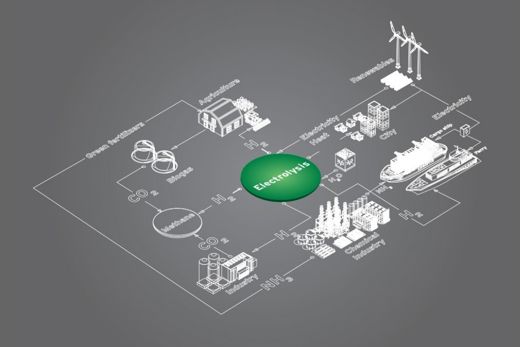
Experts agree that the growth of jolt in the coming decades will accelerate the transition to renewables. According to some estimates, the renewables-based zap of European industry, structures, and movement will allow the continent to reduce its energy-related CO2 emissions by 90% by 2050.This pattern is now discernible. For example, installing a world-first 100 MW of utility-scale transmission-associated energy capacity close to high-volume power associations will enable a public organisation of quick electric vehicle charging stations. The project is expected to have a significant role in hastening the UK's energy progress push toward net-zero discharges by 2050. Laaksonen emphasises that new uses for power will emerge, such as the production of hydrogen from water via electrolysis, the reuse of carbon dioxide by air capture, and the production of nitrogen for composts via air capture. He expects that in the long run, power demand in European countries might increase by 3–4 times, but the cost will decrease (because of the boom in sustainable power). Change to electricity is critical to decarbonizing economies, but there are additional, more subtle, knock-on effects, such as improved energy security (autonomy from petroleum product exporters) and improved urban air quality.

Read More
  • Share This:  
  •  Facebook
  •  Twitter
  •  Google+
  •  Stumble
  •  Digg
Newer Posts Older Posts Home

ez

Popular Posts

  • We are the experts in renewable energy: Clean facts you need to know
    As experts in the field of renewable energy, they are committed to promoting the use of clean, sustainable energy sources to power our world...
  • Exploring the Benefits of Solar Energy: Cost Savings, Environmental Impact, and More.
    Solar energy is a renewable source of energy that is rapidly gaining attention around the world. This type of energy is generated by the use...
  • Metal Hydride Storage: A Promising Option for Hydrogen Storage
    Introduction: Hydrogen has the potential to be an important source of clean energy for transportation, industry, and residential application...

Recent Posts

Categories

  • Biofuel
  • Energy storage
  • Environment
  • Green energy
  • Hydro
  • Pollution
  • Solar
  • Wind

Blog Archive

  • ►  2023 (16)
    • ►  April (1)
    • ►  March (6)
    • ►  February (6)
    • ►  January (3)
  • ▼  2022 (3)
    • ▼  October (1)
      • The Complete Guide to Fourth Generation Biofuel an...
    • ►  August (1)
      • India has become the third-largest ecologically fr...
    • ►  July (1)
      • The future of renewable energy is being altered by...
  • ►  2021 (8)
    • ►  May (2)
    • ►  April (3)
    • ►  March (2)
    • ►  February (1)

We are the experts in renewable energy: Clean facts you need to know

As experts in the field of renewable energy, they are committed to promoting the use of clean, sustainable energy sources to power our world...

Categories

Labels

  • Biofuel
  • Energy storage
  • Environment
  • Green energy
  • Hydro
  • Pollution
  • Solar
  • Wind

Popular Posts

  • We are the experts in renewable energy: Clean facts you need to know
  • Exploring the Benefits of Solar Energy: Cost Savings, Environmental Impact, and More.

Search This Blog

Powered by Blogger.

Report Abuse

  • Home

Copyright © Renewable Exergy | Powered by Blogger
Design by Hardeep Asrani | Blogger Theme by NewBloggerThemes.com | Distributed By Gooyaabi Templates